
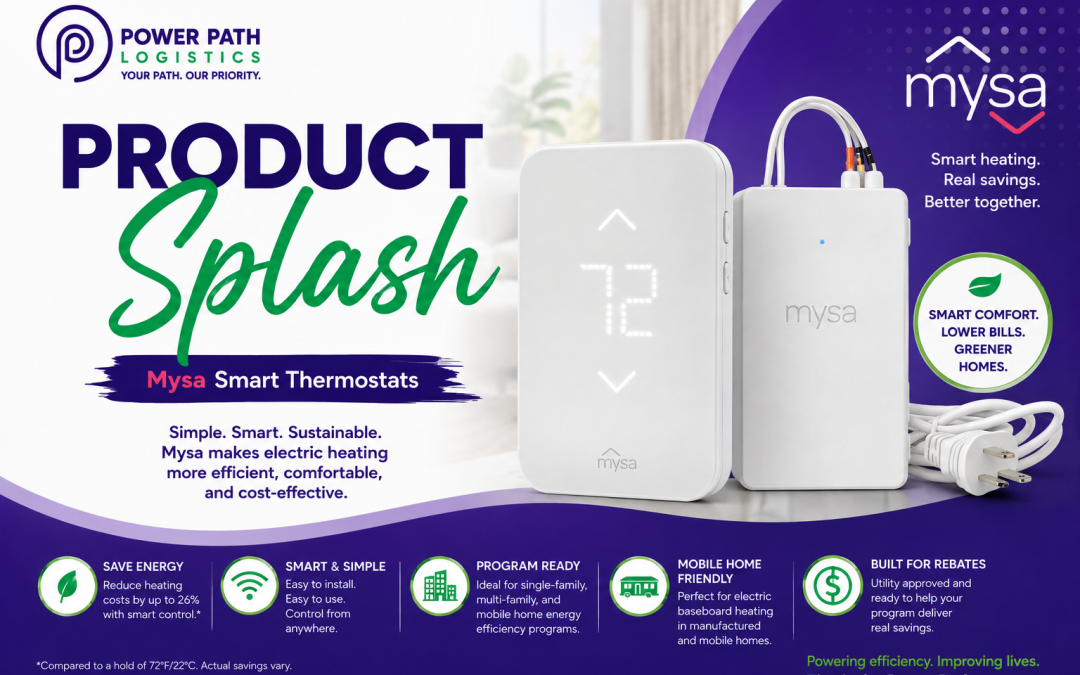
Note: Mysa for Baseboards is designed for specific high-voltage electric heating systems. Compatibility should be verified before deployment, and installation may require a licensed electrician depending on local requirements. Mysa states that its baseboard products are not designed for standard 24V central HVAC systems.
When we think about energy efficiency, we often picture insulation, efficient HVAC equipment, LED lighting, or heat pumps. But sometimes, one of the biggest opportunities is already installed in the home. For homes heated with electric baseboards, the thermostat can be a powerful energy-efficiency tool. Mysa smart thermostats are particularly interesting because they can bring smart controls to a type of electric heating that is common in many single-family homes, multifamily properties, and manufactured or mobile homes.
Mysa makes smart thermostats specifically designed for different types of heating and cooling systems. Mysa for Baseboards is designed for high-voltage 120V and 240V electric heating, including electric baseboards, convectors, fan-forced heaters, and certain radiant ceiling systems. Unlike a traditional thermostat that simply turns heat on and off based on temperature, Mysa adds smart controls such as:
- Custom heating schedules
- Remote control through the Mysa app
- Geofencing
- Zonal heating
- Energy monitoring on the Baseboard V2
- Energy-use reports
- Smart home integration
- Participation in utility demand response programs where available
With smart scheduling, homeowners can program temperatures around their daily routines—reducing heating when the household is asleep, away at work or school, or otherwise doesn’t need as much heat. Mysa also supports zoning, allowing multiple thermostats to be managed individually or grouped together. This makes Mysa a potential fit for programs such as:
- Home energy efficiency programs
- Electric heating upgrade programs
- Weatherization initiatives
- HVAC and controls programs
- Direct-install programs
- Utility rebate programs
- Income-qualified energy efficiency programs
For a homeowner, the experience is simple: more control over comfort and potentially lower heating costs. For a utility, thousands of connected thermostats can create an even bigger opportunity.
Multifamily buildings present a different challenge. A single apartment may have several electric baseboard heaters, each serving a different room. Multiply that across 50, 100, or even 500 units, and there can be a tremendous number of individual heating controls. That also creates a tremendous energy-efficiency opportunity. Mysa can allow program administrators and property owners to bring smart controls to existing electric heating without replacing the entire heating system. Instead of undertaking a major HVAC replacement, a program may be able to improve the way the existing heating equipment is controlled. Potential multifamily applications include:
Affordable housing: Smart thermostats can be incorporated into energy efficiency initiatives designed to reduce energy costs for residents.
Apartment energy efficiency programs: Programs can deploy thermostats across multiple units as part of a larger portfolio-wide initiative.
Multifamily retrofit programs: Mysa can complement other upgrades such as insulation, air sealing, lighting, appliances, and HVAC improvements.
Resident engagement: A smart thermostat gives residents a technology they interact with every day, creating an opportunity to connect them with broader energy-saving education.
For program implementers, the ability to deploy the same type of product across a large number of units can also simplify procurement, fulfillment, installation, and program management.
Mobile and manufactured homes can be an important focus for energy efficiency programs, particularly programs designed around affordability and energy burden. Many manufactured homes use electric heating, including electric baseboards and other electric resistance heating systems. That makes smart controls a potentially valuable efficiency measure: rather than requiring a complete heating-system replacement, a program may be able to improve the performance of the existing system through better temperature management. For eligible homes, Mysa could potentially be incorporated into:
- Manufactured-home energy efficiency programs
- Community action and energy assistance initiatives
- Utility rebate programs
- Resident-owned community upgrades
- Weatherization programs
- Income-qualified efficiency programs
One of the most exciting aspects of connected thermostats is that their value doesn’t necessarily stop with energy efficiency. They can also become part of the demand response movement. Consider a hot summer afternoon or a cold winter morning when electricity demand is especially high. Utilities need to manage that peak demand while maintaining reliable service, and a connected thermostat can provide a way for participating customers to temporarily adjust their heating or cooling during a demand response event. Mysa currently supports enrollment in utility demand response programs where available. Its 2026 app updates also include improvements to the demand response enrollment experience. That means a thermostat installed as part of an energy efficiency program can potentially provide value beyond its initial energy savings.
The transition to a more efficient electric grid isn’t just about producing cleaner energy. It’s also about using energy more intelligently, and connected thermostats can help households respond to changing conditions while maintaining control over their comfort. Mysa’s scheduling and zoning capabilities are designed to help heat only the spaces that need it and reduce heating when it isn’t necessary. The Baseboard V2 also includes power monitoring and energy insights to help customers understand their heating consumption. And because the thermostat is connected, program administrators can potentially use that same installed technology for additional grid-focused initiatives.
Sometimes, making existing equipment smarter can be an important part of the solution. For single-family homes, Mysa can give residents better control over electric heating. For multifamily properties, it can provide a scalable approach to smart heating controls. For mobile and manufactured homes, it can bring modern energy management capabilities to existing electric heating systems. And through demand response, connected thermostats can potentially become part of something even bigger: a more flexible, responsive, and resilient electric grid.
At Power Path Logistics, we’re proud to help energy efficiency programs turn ideas like these into real-world deployments. Power Path Logistics supports energy efficiency programs with product distribution, fulfillment, inventory management, kitting, and logistics, helping program implementers move products from manufacturers into the hands of the people who need them.
Your Path. Our Priority.