
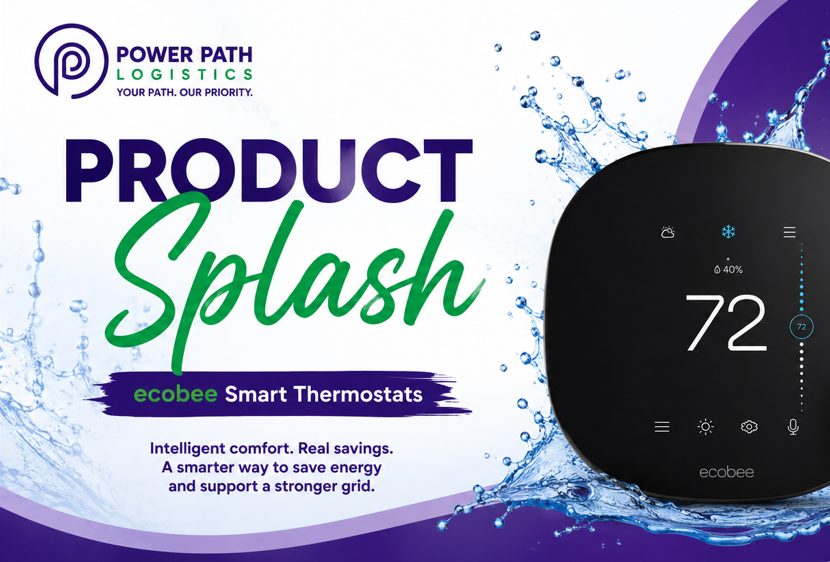
When we talk about energy efficiency, we often focus on insulation, lighting, HVAC equipment, or the latest high-efficiency appliances. But one of the most powerful energy-saving tools may already be sitting on the wall: the thermostat. At Power Path Logistics, we work with energy efficiency programs across the country, supporting the distribution and fulfillment of products that help utilities, program implementers, contractors, and customers turn energy-saving goals into real-world results. One technology we see playing an increasingly important role is the ecobee smart thermostat.
From single-family homes to multifamily properties and large-scale utility programs, smart thermostats can do more than simply tell a heating and cooling system when to turn on. They can help customers use less energy, better understand their consumption, participate in utility programs, and ultimately become part of a more flexible and resilient electric grid.
Traditional thermostats primarily control temperature, and mart thermostats add intelligence, connectivity, automation, and data. ecobee’s current smart thermostat lineup includes models designed for different applications, with the company identifying its Smart Thermostat Lite as a fit for light commercial and multifamily applications and its Enhanced model for both single-family and multifamily settings. That flexibility makes smart thermostats particularly valuable for energy efficiency programs. Depending on the program design, an ecobee thermostat can help:
- Automate heating and cooling schedules
- Adjust temperatures when a home is unoccupied
- Provide customers with greater visibility into energy use
- Optimize heating and cooling around time-of-use rates
- Deliver energy efficiency savings through software
- Participate in demand response events
- Provide utilities with a connected device that can respond during periods of high demand
Single-family homes are one of the most familiar applications for smart thermostats. A utility or energy efficiency program might provide a rebate for an ecobee thermostat, offer one through a home energy assessment, or incorporate the thermostat into a broader HVAC or weatherization initiative. Once installed, the thermostat can begin helping the household save energy through scheduling, occupancy awareness, and optimization. ecobee reports that its current smart thermostats can provide up to 23%–26% savings on annual heating and cooling costs, depending on the model and comparison methodology. Its eco+ software adds additional optimization capabilities.
Multifamily programs bring a different set of challenges and opportunities. Instead of working with one homeowner at a time, programs may be installing hundreds or thousands of thermostats across an apartment community, affordable housing portfolio, or multifamily network. That creates an enormous opportunity to standardize installation, streamline fulfillment, and create consistent energy-saving outcomes across many units.
We believe demand response is where smart thermostats get especially interesting. Think about a hot summer afternoon: air conditioners across a community may be running at the same time. Electricity demand rises. Instead of building enough generation and grid infrastructure to meet every possible peak, utilities can also look for ways to reduce or shift demand. That’s where connected thermostats can help! ecobee’s Community Energy Savings technology can precool homes before a demand response event and then make temporary, slight temperature adjustments during periods of peak demand. Customers can participate through their utility’s program and can opt out of an event. In other words, the thermostat isn’t just saving energy, it’s helping move energy use to a better time.
Now imagine a utility program with 50,000 participating homes. Each thermostat represents a small amount of potential flexibility. One home may not make much of a difference to the grid. But 50,000 connected homes responding together can create a meaningful reduction in peak demand. That’s the promise of demand response: small actions multiplied across an entire population. ecobee has developed utility-focused tools specifically around this concept, including demand response, grid resiliency, time-of-use programs, rebate programs, and income-qualified initiatives.
Technology is only one part of a successful energy efficiency or demand response program. Another part is execution. When a program calls for thousands of thermostats to reach homes, contractors, or multifamily properties, someone has to make sure the right products get to the right place at the right time. That’s where Power Path Logistics comes in: We support energy efficiency programs with product distribution, fulfillment, kitting, inventory management, and logistics—helping program implementers move products from manufacturers into the hands of the people who ultimately put them to work. Whether the project involves a few hundred thermostats or a large-scale deployment across multiple markets, the logistics behind the program matter.
The future of energy efficiency won’t be defined by one product or one technology. It will come from connecting many technologies—and many people—into a smarter energy ecosystem. Whether you’re developing a single-family energy efficiency program, deploying smart thermostats across a multifamily portfolio, or building a demand response initiative, successful implementation starts with the right products and the right logistics behind them.
Your Path. Our Priority.